
If you’ve spent any time working in computational chemistry or plasma modelling, you know a universal truth: scientists are exceptional at generating complex data, but making that data effortless to navigate is a whole different discipline.
Academic literature moves fast. New cross-sections, rate coefficients, and reaction pathways emerge weekly. Yet, all too often, researchers are forced to spend more time wrangling data structures, cross-referencing messy literature, and navigating rigid database interfaces than actually running simulations.
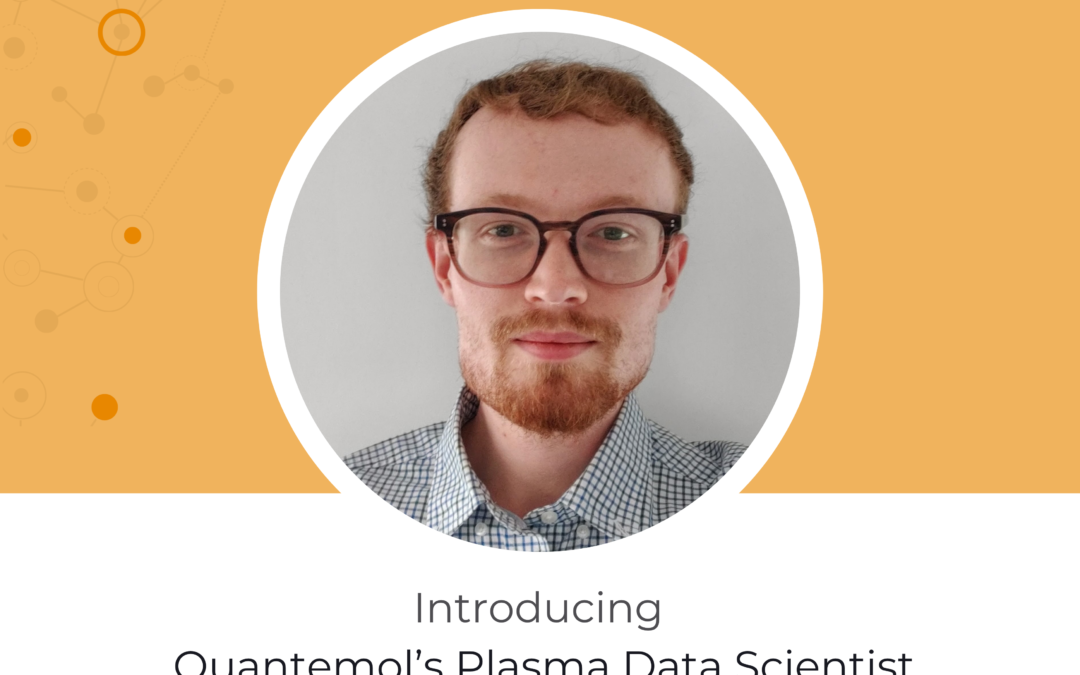
At Quantemol, our mission has always been to remove friction between raw atomic data and industrial application. That’s why we are excited to introduce the newest addition to our core development team: Dr. Alex Moriarty.
From UCL Computational Chemistry to Software Innovation
Alex joins Quantemol after completing a PhD in Computational Chemistry at University College London (UCL). During his doctoral research, Alex worked alongside leading experts across academia and industry, developing simulation methodologies and machine learning techniques for molecular design.
Beyond theoretical chemistry, Alex brings extensive software engineering and web architecture experience, making him uniquely suited to solve one of the biggest bottlenecks in plasma modelling: data accessibility.
“During my research, I constantly saw how steep the learning curve was for state-of-the-art academic tools,” Alex notes. “Designing intuitive, responsive interfaces requires a very different skill set than collecting data, and tight grant deadlines mean UI/UX often gets left as ‘future work.’ At Quantemol, we’re changing that.”
The Engineering Philosophy: “Atomising” Chemical Search
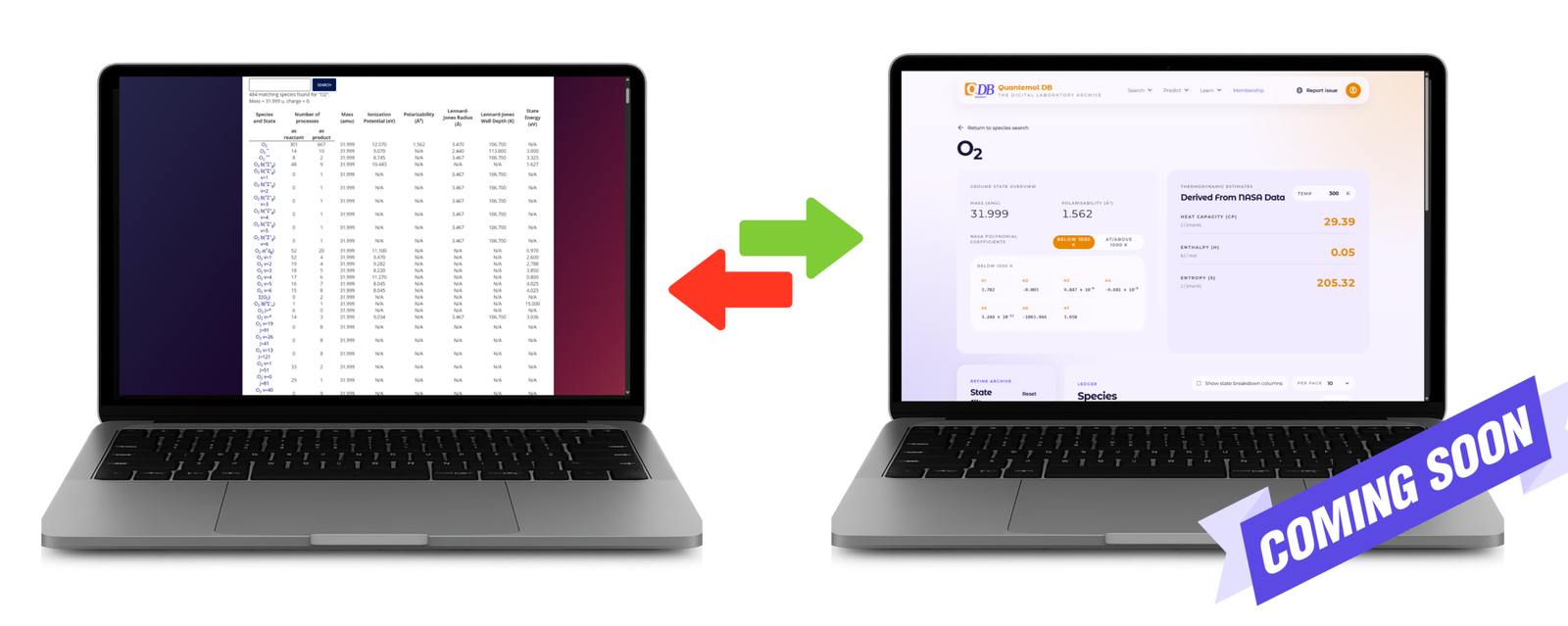
Navigating a database with tens of thousands of reactions, many with hundreds of unique vibrational or electronic states, can quickly become overwhelming. When tasked with enhancing the Quantemol Database (QDB) search experience, Alex took a fundamental approach: atomisation.
Rather than treating species or reactions as static text strings, the search architecture now breaks down every species into its core components:
- Granular Filtering: Query complex molecules like O2 or organosilicon precursors by adding specific stateful parameters into dedicated search blocks.
- Multi-Reactant & Process Isolation: Search across multiple products/reactants simultaneously while filtering precisely by collision process type.
- Interactive Data Overlay: Compare reaction cross-sections instantly across varying length scales, or inspect Arrhenius plots to evaluate data spread at specific reactor processing temperatures.
Under the Hood: A 32% Boost in Machine Learning Estimation
While interface design makes daily workflows faster, the updates to QDB extend deep into backend data science.
For plasma systems involving transient species or novel feed gases, experimental data doesn’t always exist. QDB relies on internal Machine Learning models to fill these gaps. Alex recently completed a major overhaul of our Binary Diffusion Coefficient Estimator, delivering two key technical upgrades:
- Higher Accuracy: By streamlining model parameters, the new estimator reduced prediction root-mean-square error (RMSE) by ~32% down to 0.39 (log D).
- Permutation Invariance: Physical laws don’t care about input order. The upgraded architecture mathematically guarantees that the predicted binary diffusion coefficient for CO2 → Ar is identical to Ar → CO2, ensuring consistent transport data across all modelling setups.
What’s Next?
From making first-class surface data (sticking coefficients, sputtering yields) front-and-center, to laying the groundwork for smoother export pipelines into third-party solvers like CHEMKIN and COMSOL, Alex’s focus remains clear: let scientists focus on modelling, not data management.
Please join us in welcoming Alex to the Quantemol team! Have feedback on QDB or a feature request for our data team? Contact Us Here
By Annie Laver & Alex Moriarty
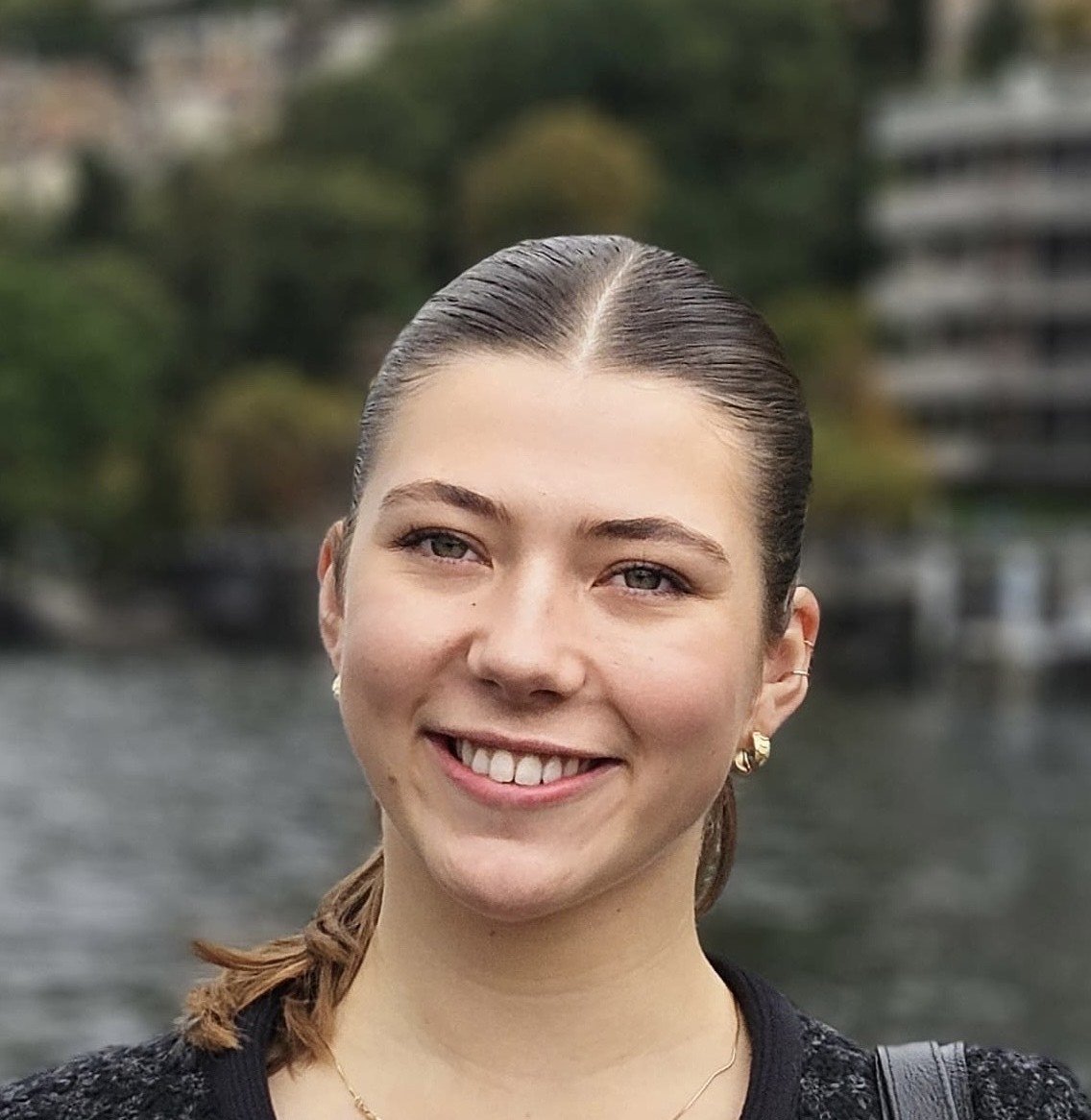
Annie Laver
MARKETING & EVENTS MANAGER

Dr Alex Moriarty
PLASMA DATA SCIENTIST