Quantemol Electron Collisions: Master Electron Molecule Scattering
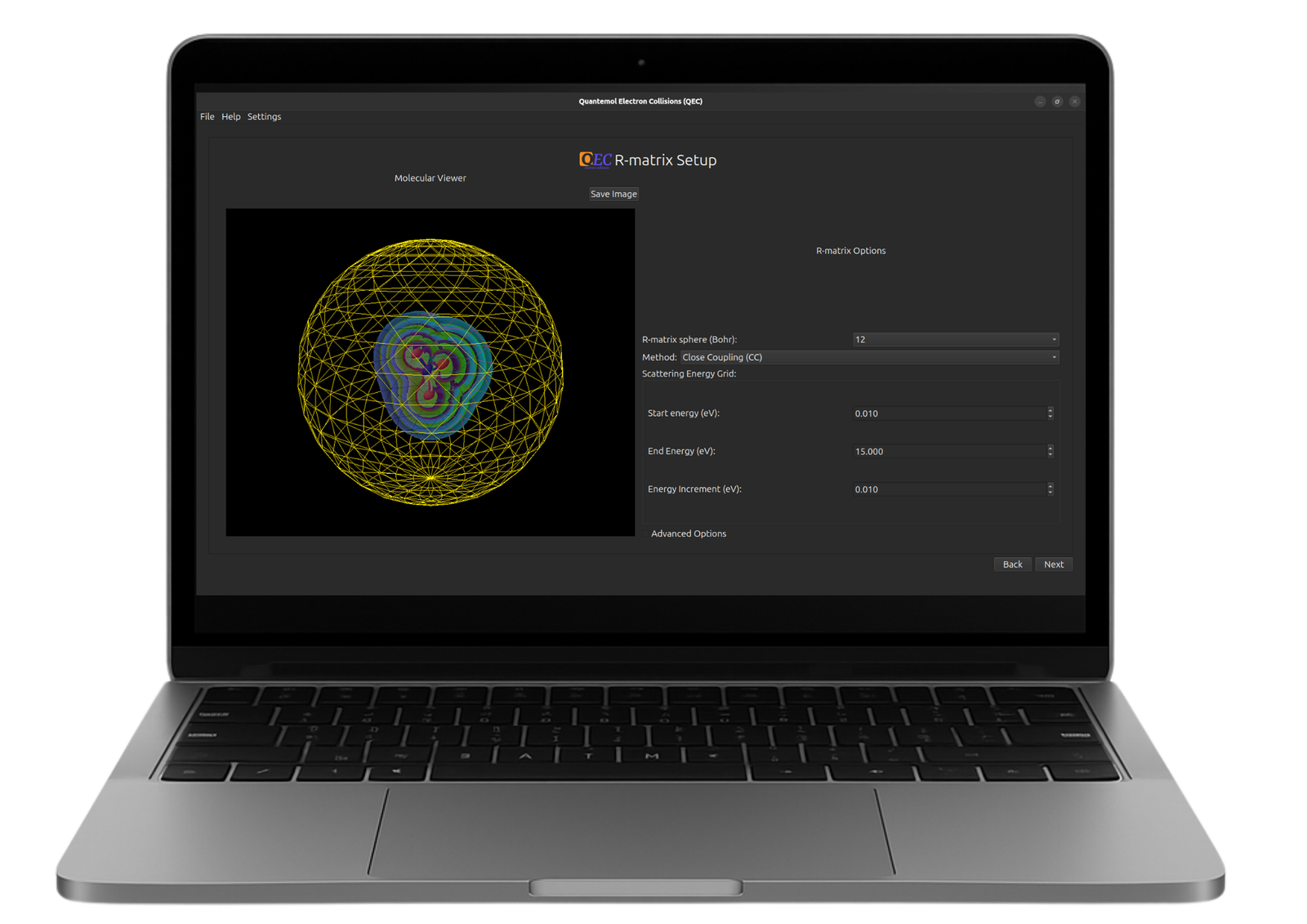
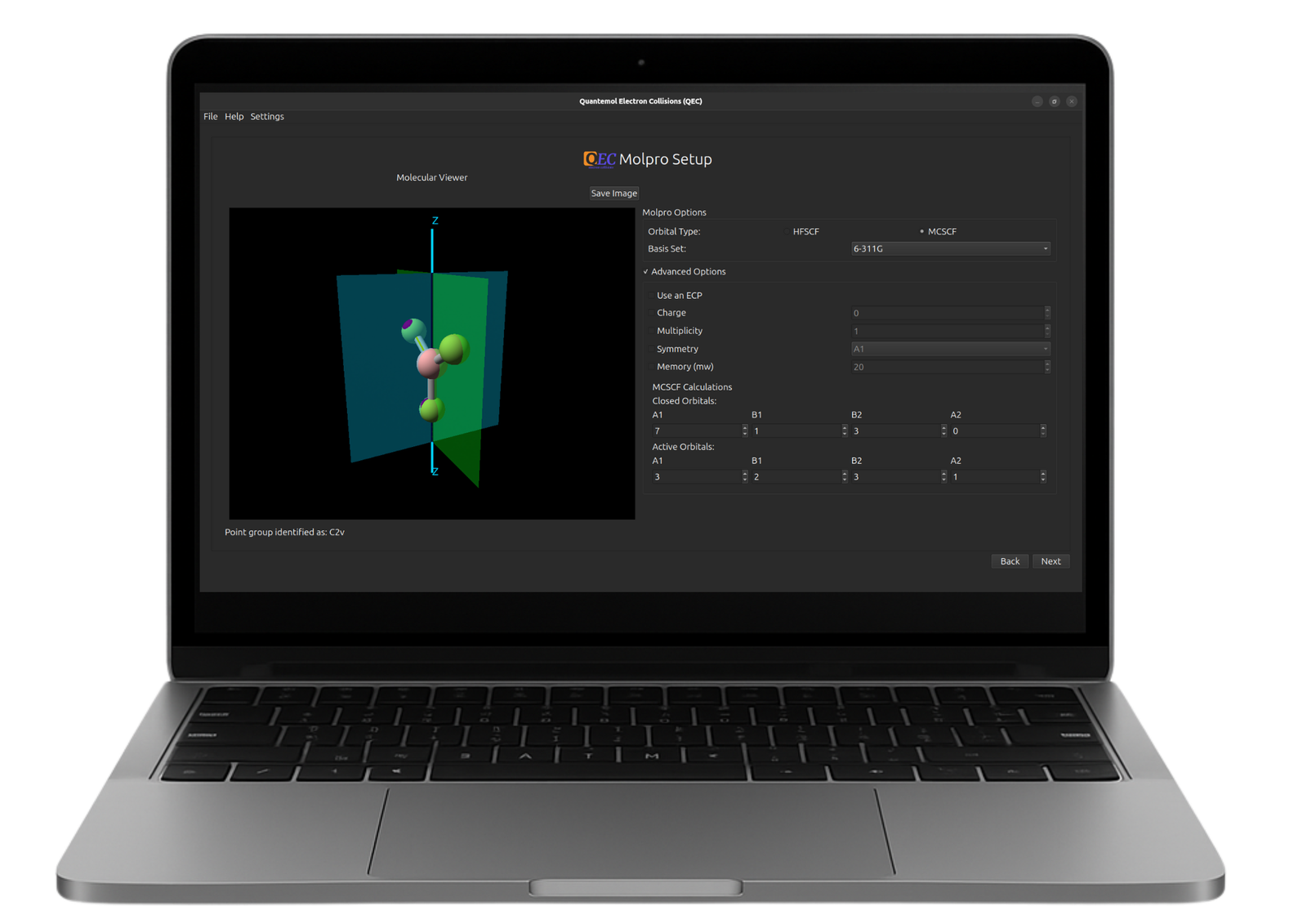
QEC is a highly-automated, next-generation software for calculating electron-molecule scattering cross sections with ease. Its intuitive graphical interface simplifies complex calculations. Utilising Molpro and the UKRmol+ R-matrix suite, QEC brings sophisticated quantum chemistry into a user-friendly package. Request a Free Trial
Quantemol Electron Collisions: Master Electron Molecule Scattering
QEC is a highly-automated, next-generation software for calculating electron-molecule scattering cross sections with ease. Its intuitive graphical interface simplifies complex calculations. Utilising Molpro and the UKRmol+ R-matrix suite, QEC brings sophisticated quantum chemistry into a user-friendly package. Request a Free Trial
Quantemol Electron Collisions: Master Electron Molecule Scattering
QEC is a highly-automated, next-generation software for calculating electron-molecule scattering cross sections with ease. Its intuitive graphical interface simplifies complex calculations. Utilising Molpro and the UKRmol+ R-matrix suite, QEC brings sophisticated quantum chemistry into a user-friendly package. Request a Free Trial

Unique Data
Calculate data unobtainable by other methods.

Unified Approach
One input set covers multiple methods (R-matrix, SCOP, BEf) for all energy regions.

Reliable
Uses only validated, robust methods.

Easy to Use
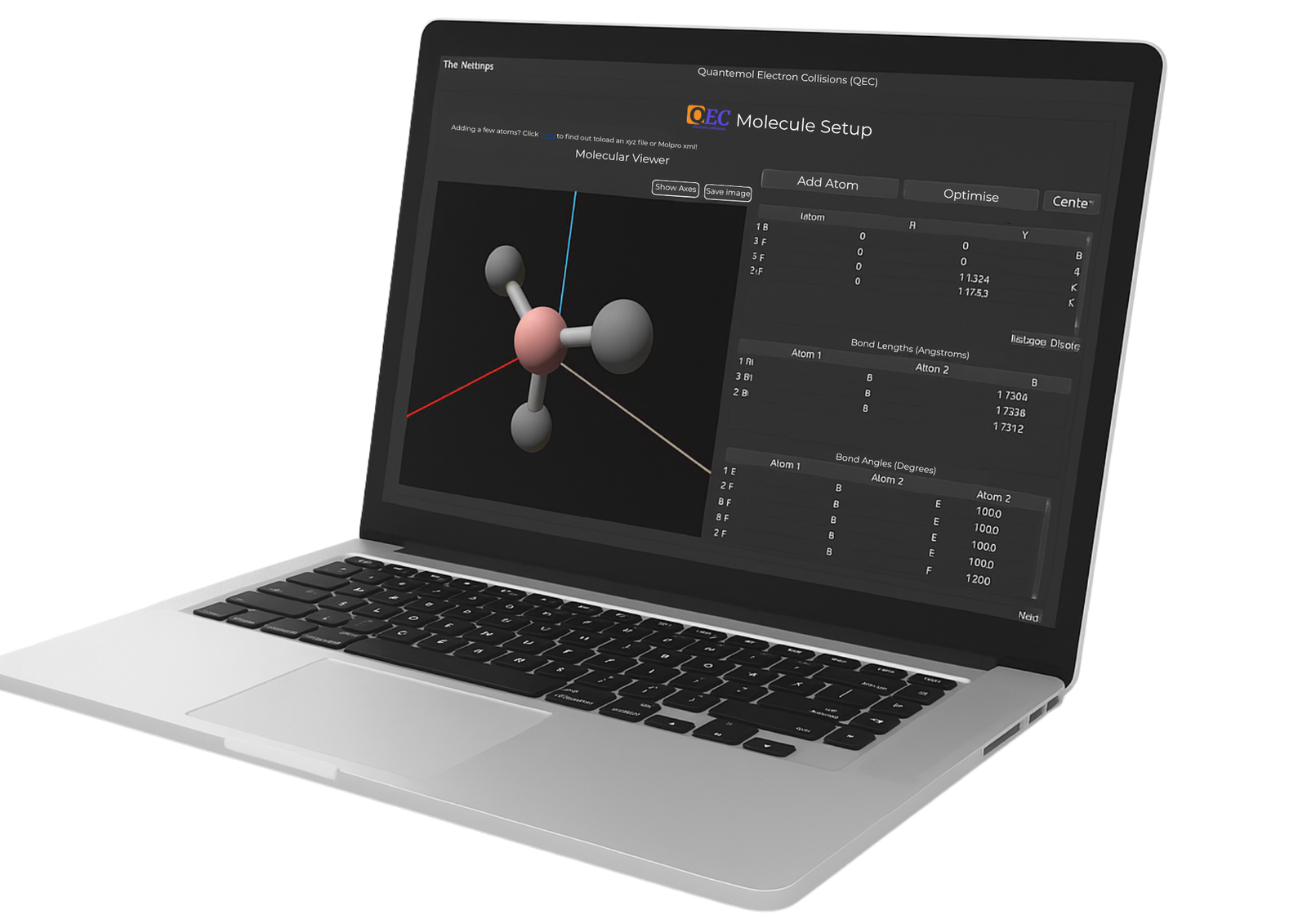
Simple interface for setup, viewing, and export (watch our tutorial).

Publisher-Ready Results
Flexible formats and conversion assistance.

Fast
OpenMP parallelism speeds up calculations.

Expert Support
Get help from our team when you need it.

Quick Start
Includes ~10 molecular examples to get you going immediately.
Unique Data
Calculate data unobtainable by other methods.
Unified Approach
One input set covers multiple methods (R-matrix, SCOP, BEf) for all energy regions.
Reliable
Uses only validated, robust methods.
Easy to Use
Simple interface for setup, viewing, and export (watch our tutorial).
Publisher-Ready Results
Flexible formats and conversion assistance.
Fast
OpenMP parallelism speeds up calculations.
Expert Support
Get help from our team when you need it.
Quick Start
Includes ~10 molecular examples to get you going immediately.
Unique Data
Calculate data unobtainable by other methods.
Unified Approach
One input set covers multiple methods (R-matrix, SCOP, BEf) for all energy regions.
Reliable
Uses only validated, robust methods.
Easy to Use
Simple interface for setup, viewing, and export (watch our tutorial).
Publisher-Ready Results
Flexible formats and conversion assistance.
Fast
OpenMP parallelism speeds up calculations.
Expert Support
Get help from our team when you need it.
Quick Start
Includes ~10 molecular examples to get you going immediately.
QEC can handle:
QEC can handle:
Get a wide range of electron-molecule collision data, including:
✅Electron scattering cross-sections:
- Elastic, excitation, ionisation cross sections
- Super-elastic/quenching/de-excitation cross-sections
- Differential and momentum transfer cross-sections
- Rotational/vibrational excitation (excluding open-shell molecules)
- Dissociative electron attachment
- Electronic & vibrational de-excitation cross sections
- Dissociative ionisation cross sections
✅Effective Core Potentials for molecules with heavy atoms
✅Closed and open-shell molecules, radicals, and charged species
✅Large molecules (up to 25 atoms)
✅Reaction rates
✅Arrhenius parameters and resonance parameters
Get a wide range of electron-molecule collision data, including:
✅Electron scattering cross-sections:
- Elastic, excitation, ionisation cross sections
- Super-elastic/quenching/de-excitation cross-sections
- Differential and momentum transfer cross-sections
- Rotational/vibrational excitation (excluding open-shell molecules)
- Dissociative electron attachment
- Electronic & vibrational de-excitation cross sections
- Dissociative ionisation cross sections
✅Effective Core Potentials for molecules with heavy atoms
✅Closed and open-shell molecules, radicals, and charged species
✅Large molecules (up to 25 atoms)
✅Reaction rates
✅Arrhenius parameters and resonance parameters
Get a wide range of electron-molecule collision data, including:
✅Electron scattering cross-sections:
- Elastic, excitation, ionisation cross sections
- Super-elastic/quenching/de-excitation cross-sections
- Differential and momentum transfer cross-sections
- Rotational/vibrational excitation (excluding open-shell molecules)
- Dissociative electron attachment
- Electronic & vibrational deexcitation cross sections
- Dissociative ionisation cross sections
✅Effective Core Potentials for molecules with heavy atoms
✅Closed and open-shell molecules, radicals, and charged species
✅Large molecules (up to 25 atoms)
✅Reaction rates
✅Arrhenius parameters and resonance parameters
At Quantemol, our sophisticated electron collision calculations are powered by a unique blend of highly specialised software. This integrated approach ensures precision, reliability, and advanced capabilities for our users.
Molpro:A powerful quantum chemistry package.
UKRmol+:The molecular R-matrix suite from the UK-AMOR consortium.
At Quantemol, our sophisticated electron collision calculations are powered by a unique blend of highly specialised software. This integrated approach ensures precision, reliability, and advanced capabilities for our users.
Molpro: A powerful quantum chemistry package.
UKRmol+: The molecular R-matrix suite from the UK-AMOR consortium.